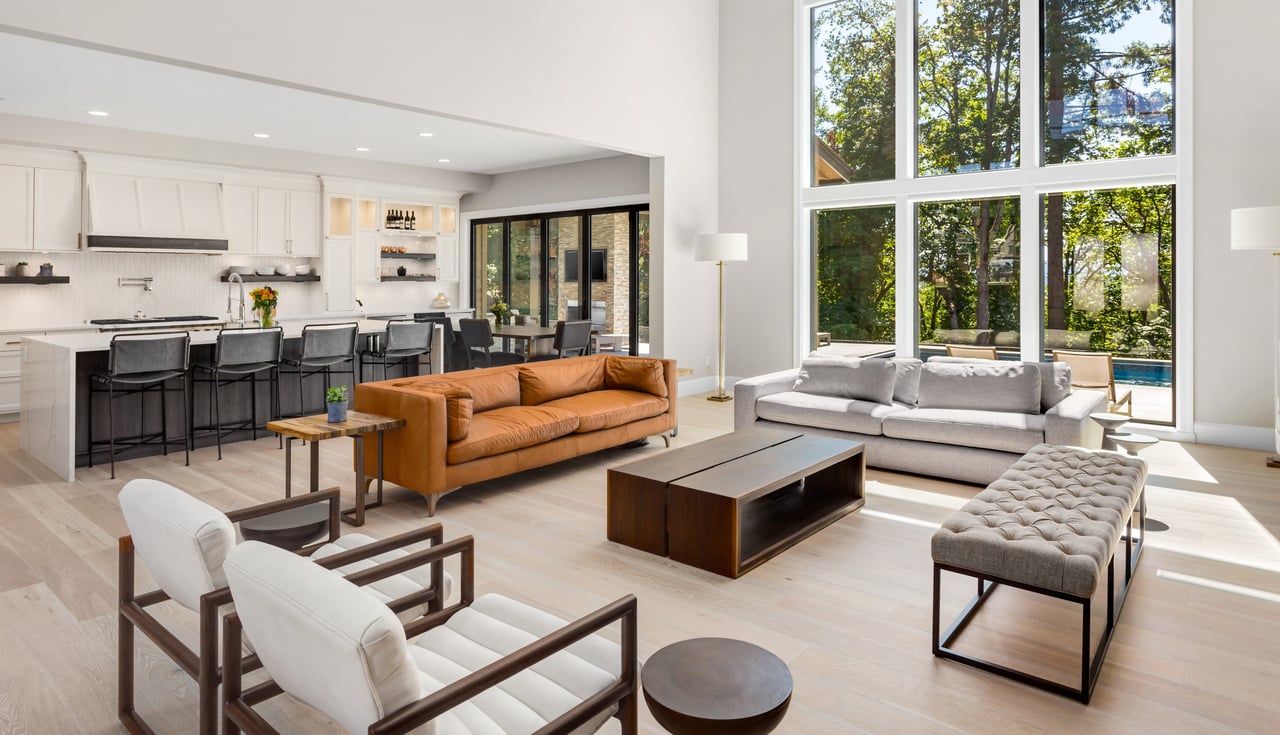
You walk into a home and the kitchen gets your attention before you’ve made it through the front door. Beautiful stone, cabinets that fit the room perfectly and lighting you’re already trying to find online.
Then you see the price.
Maybe the home deserves it. Before deciding, keep walking.
When you’re comparing homes in Nashville, Franklin or Brentwood, the useful question is what that extra money actually buys you. Some features would be difficult to find again. Some will make your life easier every day. And some may be expensive things you would immediately want to change.
Start with what you can’t easily change
Where does the house sit on the property? What do you see from the rooms you’ll use most? How close are the neighbors? Is the yard usable, or does most of the acreage fall away behind the house?
Think about the drive, too. A beautiful property can feel different after you’ve made the trip to work, dinner or the places you regularly go.
Privacy, mature trees, natural light and a location that fits your life deserve attention. So do the limitations. A steep driveway, road noise or an awkwardly positioned house may still bother you long after you’ve stopped noticing the countertops.
Those details help explain why two homes with similar square footage can feel very different. Whether they support a particular price takes a closer look at comparable sales and the alternatives available.
Get specific about quality
“Custom” can cover a lot of ground.
Look at how the cabinets are built and installed. Open the drawers. Notice how the doors close. Look at the transitions between materials and the way the trim meets at a corner.
In an older home, pay attention to what was preserved. Original millwork, well-proportioned rooms and windows that suit the architecture can be part of what makes the house worth considering in the first place. Replacing everything doesn’t automatically improve it.
Then ask about the work you can’t see. What was included in the renovation? Were the mechanical systems updated? What documentation is available?
Construction details, records and an appropriate inspection help you understand what you’re buying beyond the initial impression.
Walk through an ordinary day
A house can photograph beautifully and still make daily life awkward. Does the office give you enough quiet? Will guests have comfortable space? Can people gather in the kitchen without getting in the way of someone cooking?
At 935 Glendale Lane, one of our past sales, the back porch connects directly to the living room through sliding doors, with an outdoor kitchen and fireplace. That connection is a useful detail to notice: how easily would you move between the spaces, and how often would you use them?
A floor plan that works for you can be a good reason to choose one property over another. It still needs to be considered alongside the condition, setting and price.
Be honest about someone else’s taste
You can appreciate an expensive decision without wanting to pay extra for it.
A dramatic stone slab, elaborate wallpaper or a highly specialized room may be beautifully executed. The owner may have spent a great deal on it. You may still be thinking about what it would cost to change.
There’s nothing wrong with buying a home because you love those choices. Just recognize how much of the appeal is personal.
If you’re selling, the same consideration applies. An improvement’s original cost is useful background, but buyers will also weigh whether they want it, how it compares with other homes and what work they’ll need to do themselves.
Include the upkeep
Ask about the roof, heating and cooling systems, windows, drainage and maintenance history. Consider what it takes to care for the grounds, pool or other features that attracted you.
Recent updates and good records can make a home easier to evaluate. Older systems or unanswered maintenance questions belong in the conversation about price, even when the house shows beautifully.
Bring it back to the market
After the walk-through, there are still two questions to answer: What makes this home worth more to you, and what supports the asking price?
Compare relevant closed sales, condition, setting, layout and the homes competing for the same buyers. Price per square foot can be a starting point, but it leaves a lot unexplained.
If resale matters to your plans, consider which features another buyer could reasonably value and which depend heavily on sharing your preferences. No feature guarantees a future result.
Before you pay a premium, be able to explain it in plain language. You may be paying for a setting you haven’t found elsewhere, quality you’ve verified or a house that fits your life unusually well. Knowing why gives you a better basis for deciding what to offer.
